| Practice decision | Typical value | Planning use |
|---|---|---|
| Starting tempo | A tempo you can play comfortably | Begin every new passage here and ignore the target speed until the passage feels settled. |
| Speed increase | About 3 to 5 bpm per step | Raise the metronome by this small step only after the current tempo is comfortable. |
| Speed drills | 5 to 10 minutes a day | Treat this as the allowance for speed work specifically, and keep drills inside it. |
| Overdoing it | Longer speed practice risks frustration and possible injury | Stop the drill when the window ends, even if progress feels slow. |
| Touch | Even pressure between hands and fingers | Once the notes are familiar, listen for uneven volume and fix it before adding speed. |
These figures come from Pianote’s guide to playing piano faster, which calls starting slow the best and quickest way to build speed.
How to learn piano fast is mostly a question of practising slowly and cleanly: start at a comfortable tempo, raise it in small steps and keep speed drills short. No shortcut replaces regular time at the keys.
This guide maps the beginner path from the first sessions to a first repertoire. Each section ends in a focused guide, so you can start with the route that matches your goal, whether that is reading music, playing chords, playing by ear or simply making steady progress on a favourite song.
Starting with keys, notes and a first goal
A narrow first goal keeps early sessions productive. Learning the keyboard map, settling into a sensible seated position and choosing one small piece to work on are enough to begin, and each of them feeds every later skill.
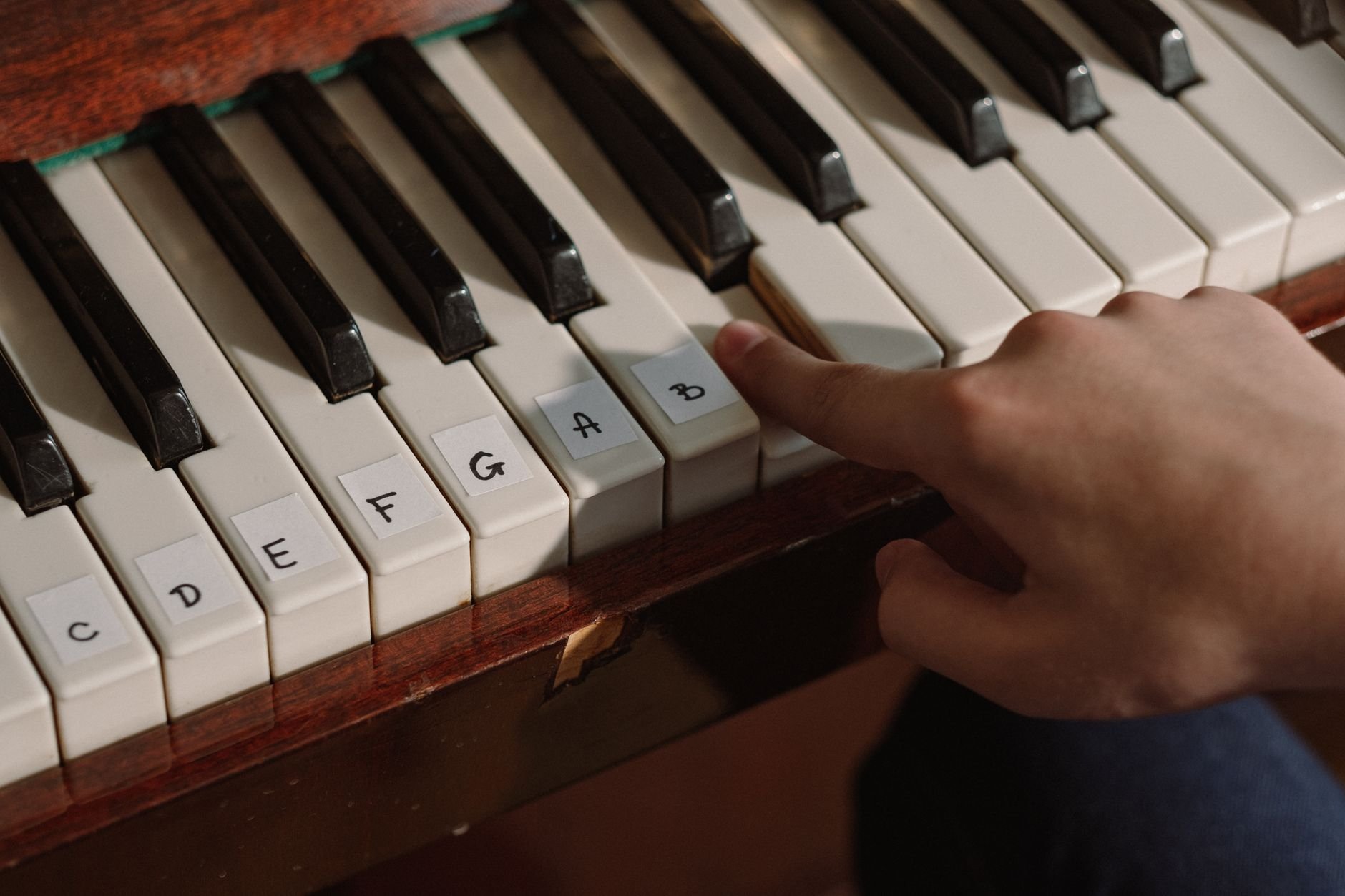
Learn the keyboard map
Every route into piano playing depends on knowing where the notes sit. A guide to piano keys and notes explains how the white and black keys relate to note names, so that reading, chords and ear training all rest on the same map. Learners who skip this step tend to hunt for notes during every later task, which turns practice time into searching time.
Set up your hands and seat
Hand shape and seat position are easier to set before habits form than to repair afterwards. A guide to correct piano hand position belongs in the opening sessions for that reason. Good setup also supports the even touch discussed later, because tension and awkward angles show up as uneven pressure between fingers.
Pick a route and blend as you go
Reading notation, playing chords and playing by ear are the main routes into the instrument. Most learners end up blending them. The sections below treat each in turn, so choose the one that matches what you most want to play and bring in the others as the first pieces demand them.
- Choose notation first if you want to play written classical or method-book pieces and need to follow a score.
- Choose chords first if your goal is accompanying songs, because chord shapes carry over from piece to piece.
- Choose ear first if you already know tunes well and want to find them on the keyboard.
Practice habits that build speed
Piano practice works best when speed is the last thing added. Pianote states plainly that the best and quickest way to increase speed is to start slow, and that playing faster takes time and practice rather than a trick. For a beginner, that turns speed from a goal into a by-product of clean repetition.
Start at a comfortable tempo
Pianote advises playing at a tempo you can play comfortably and building speed gradually. The reason it gives is that a slow start builds a better foundation of finger strength, control and dexterity. In practice, this means choosing a starting tempo by what feels easy and accurate, not by what the finished piece is supposed to sound like.
Raise the tempo in small steps
Once a passage feels comfortable, the same source suggests increasing the tempo slightly, by about 3 to 5 bpm. A metronome makes that step measurable. If the passage falls apart after an increase, the sensible response is to return to the last comfortable setting and repeat there before trying again. That keeps errors from becoming habits.
Keep speed drills short
Pianote says only 5 to 10 minutes a day of speed practice should be plenty, and warns that more risks overdoing it, which leads to frustration and possible injury. That limit applies to speed work. It is a ceiling for drills, not a target for the whole session. The rest of a session is better spent on the material below: new notes, chord shapes, reading and songs.
For learners who like structure, a good session pairs a short, slow warm-up on something familiar with a block on new material and ends with a piece they enjoy. That judgement is a suggestion about shape, not a fixed schedule, and it fits any amount of time you have available.
Finger technique and evenness
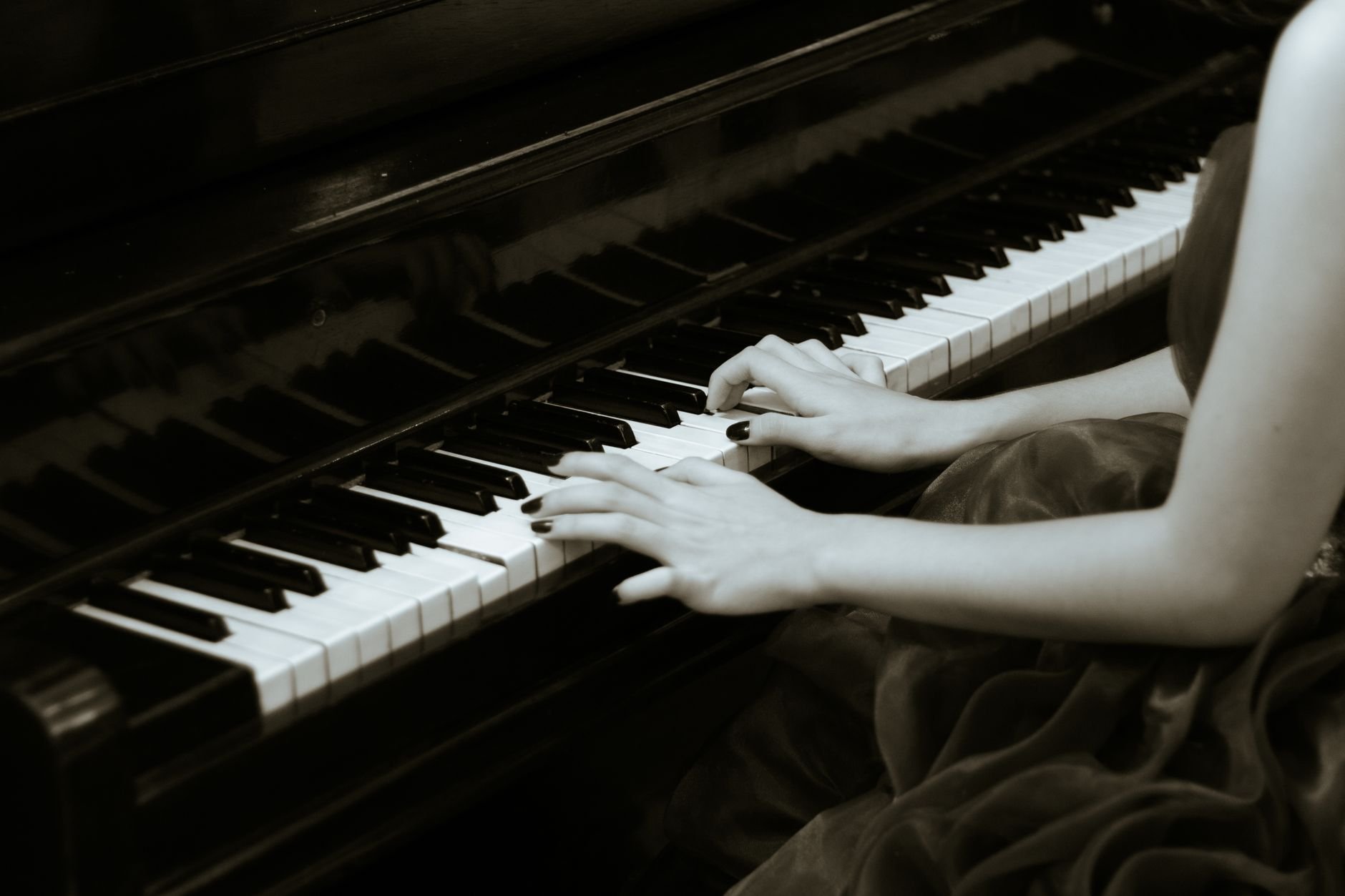
Finger technique starts with accuracy and control and only later becomes a question of speed. According to Pianote, once the notes are familiar the focus shifts to keeping even pressure between your hands and fingers. A passage that sounds lumpy at a slow tempo will sound worse when sped up.
The ring and pinky problem
Pianote notes that many players find their ring finger and pinky want to stick together. This is a common beginner difficulty, not a sign of poor aptitude. The practical response is slow, deliberate repetition at a comfortable tempo, listening for whether those fingers press as evenly as the others. Rushing the pattern rewards the sticking behaviour.
Exercises that walk up the keyboard
Pianote uses Hanon No. 1 as an example speed exercise and describes its structure: the first 2 notes of each measure are a skip, which lets the pattern walk up the keyboard. Exercises like this suit learners who want a repeatable pattern for finger work. They are not essential for every beginner, and they should sit inside the short drill window described above rather than take over practice time.
Scales as a structured testing ground
Scales give a structured place to apply even touch, because the notes are stepwise and the pattern is predictable. A guide to piano scales for beginners introduces them in a manageable order. Treat them as a tool for checking evenness and hand movement, not as a hurdle to clear before real music begins.
Chords and progressions
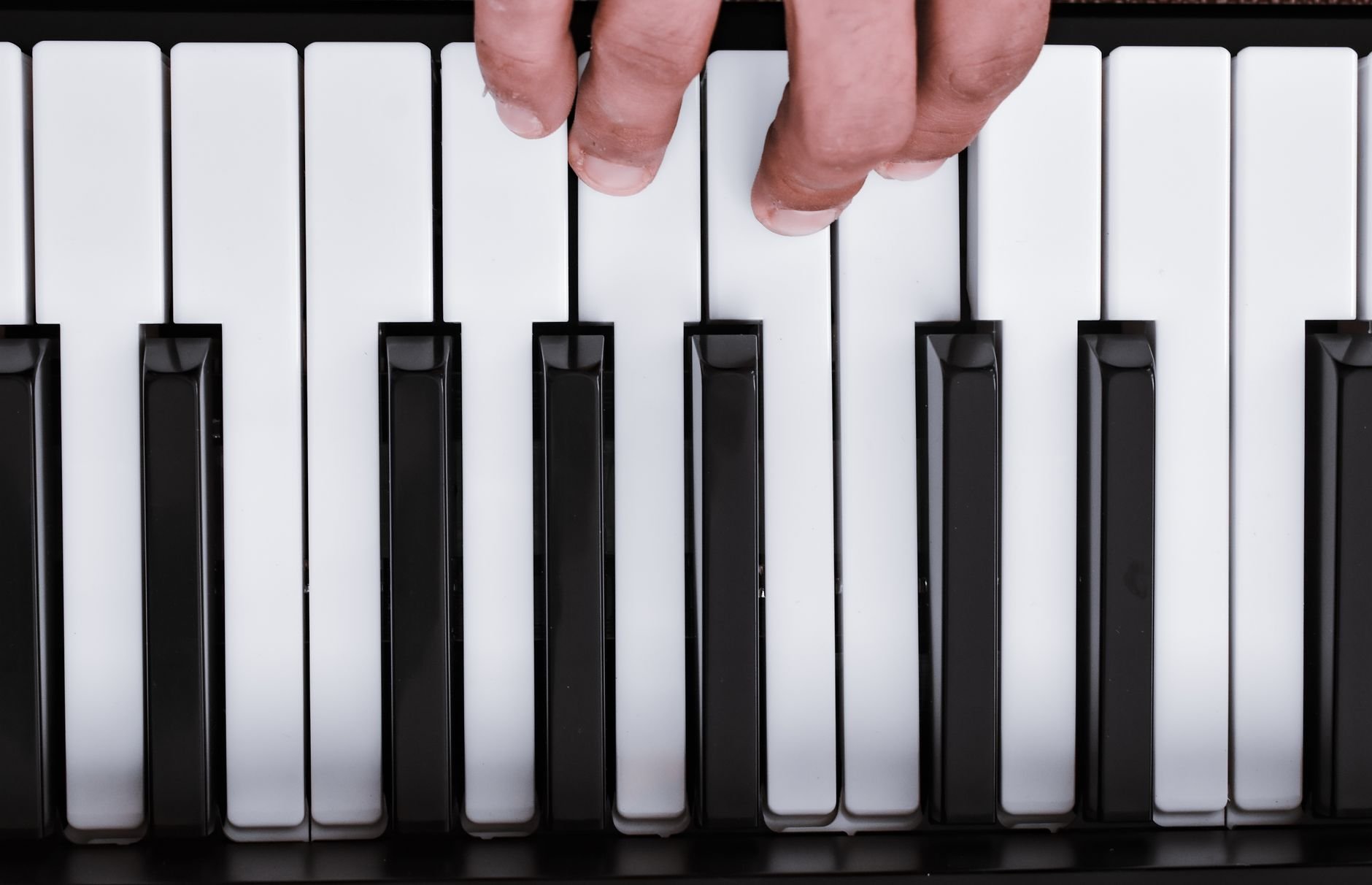
Chords let a beginner make recognisable music quickly, because a few shapes cover a large amount of song material. That is why the chord route suits learners who want to accompany singing or play pop-style arrangements without reading every note.
Start with a small set of shapes
Begin with easy piano chords for beginners, and learn each shape as a hand position you can find without searching. The same slow-first rule applies: change between shapes at a tempo where the change is clean, then tighten it gradually. Chord changes are where beginners most often hesitate, so they reward patient repetition more than speed drills.
Join chords into progressions
Once individual shapes are secure, practise moving between them in sequence. A guide to easy chord progressions piano shows how a short loop can become the backbone of a song. Looping a progression also trains the left hand to stay steady while the right hand adds melody later.
Smooth the movement with inversions
When jumping between shapes feels awkward, rearranging the notes of a chord can shorten the move. A guide to piano chord inversions covers that technique. It suits learners who already know their basic shapes, so leave it until the root-position versions are comfortable.
Reading music and playing by ear
Reading and ear playing solve different problems. Reading lets you learn pieces you have never heard; ear playing lets you reproduce tunes you already know. Beginners do not need to pick one forever, but they benefit from knowing which skill a given goal needs.
Reading notation step by step
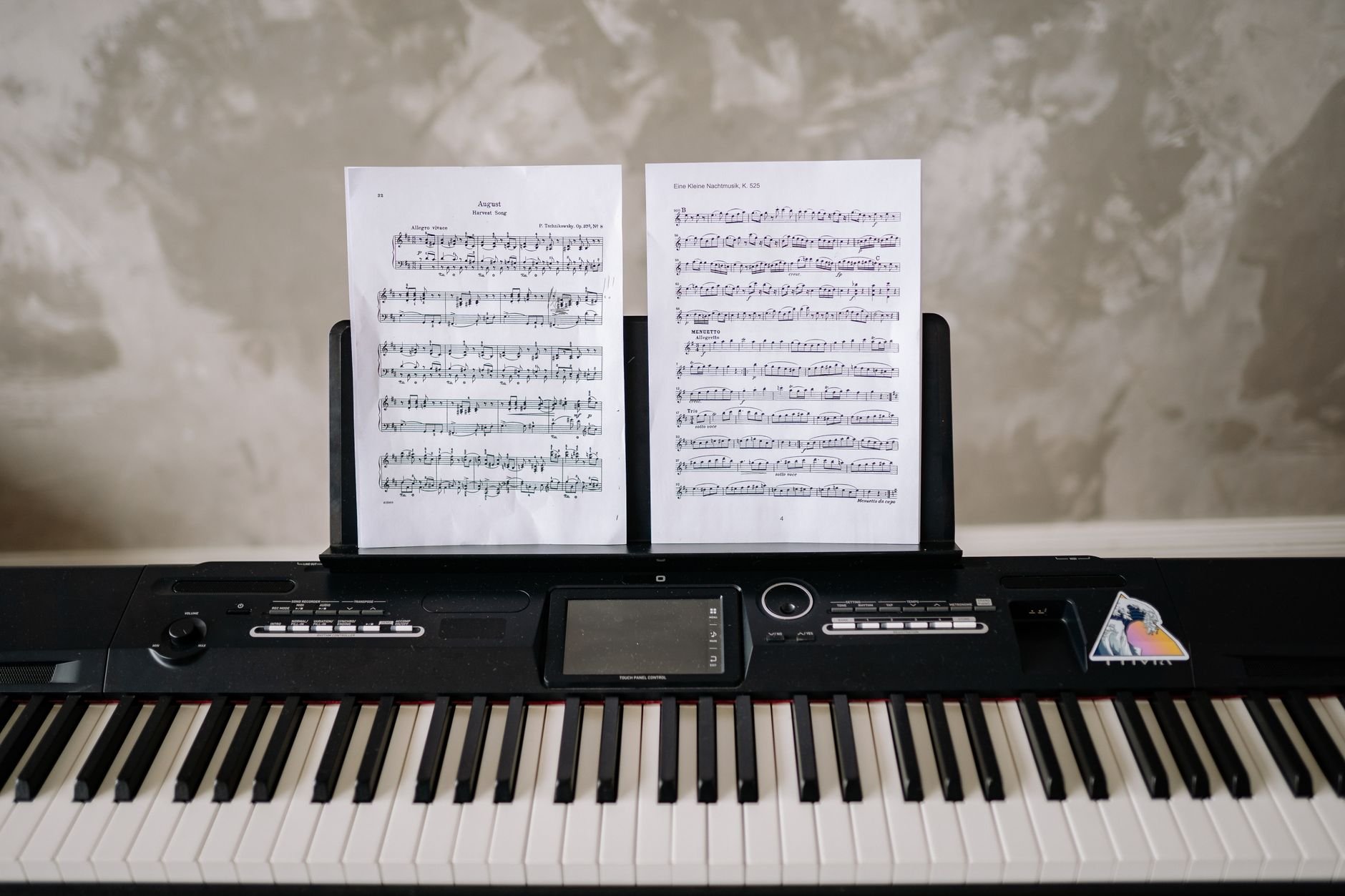
A guide on how to read piano sheet music breaks notation into manageable parts. Slow, accurate reading follows the same logic as slow, accurate playing: begin with simple material you can read without stopping, then widen the range. Choose reading first if your goal is method-book or classical repertoire.
Finding tunes by ear
Ear playing rewards learners who already have familiar melodies in their heads. A guide on how to play piano by ear shows how to work out melodies and chords without a score. It pairs well with the chord route, because a handful of chord shapes plus a good ear covers a lot of songs.
Songs and repertoire
Songs give practice a purpose. A beginner who is working toward a piece they like is more likely to keep a routine than one who only runs drills, and the slow-first approach applies directly to learning each phrase.
Choose pieces you can finish
Pick material from a list of easy piano songs for beginners and favour pieces that sit within your current reading or chord skills. A piece slightly beyond your level can be worthwhile, but one far beyond it tends to produce frustration and tempting shortcuts. If you cannot play a phrase cleanly at a slow tempo, the piece is probably too hard for now.

Keep perspective on difficulty
It can help to see how far the repertoire stretches. A look at the hardest piano piece guide puts beginner struggles in context without turning them into a target. Treat such pieces as a distant landmark, not a benchmark for your first months.
Add pedals when a piece asks for them
Many learners reach for the pedals early because they change the sound so noticeably. When a piece starts asking for pedalling, an explainer on what do the three piano pedals do is the next stop. Until then, clean fingering and even touch matter more than effects.
Choosing a learning path
The right path depends on who is learning and how they prefer to be guided. The routes above apply to everyone, but the support around them differs.
Children
Younger learners usually benefit from a teacher who sets goals and monitors habits, since they are less likely to notice uneven touch or tension themselves. A guide to piano lessons for kids covers how to approach this. Short, regular sessions are generally easier for children to sustain than occasional long ones.
Adults
Adult learners often have clear goals and limited time, which suits focused, short practice blocks. A guide to learning piano as an adult looks at how to plan around that. The warning about overdoing speed work applies strongly here, since an enthusiastic adult is more likely to push too hard in a single evening.
Learning without sight
Playing does not depend on seeing the keyboard. The guide on blind piano players explains how learners and performers work without sight, and its methods for touch and memory are useful to anyone who wants to feel where the keys are.
Apps, teachers and self-study
Self-study with piano apps for beginners suits learners who like flexible, low-cost practice and are disciplined about tempo. A teacher adds feedback on things hard to hear yourself, such as uneven pressure or a stuck pinky. Many learners combine both, using an app between lessons for repetition.
How long it takes to learn piano
There is no single timetable for learning piano, because the answer depends on what counts as learned. Pianote’s guidance is that learning to play piano faster takes time and practice, and that is the most defensible starting point. A short deadline can build a habit, but it does not replace the repetition that makes passages reliable.
Milestones are a more useful measure than a calendar. Work through them in this order:
- Play a short passage cleanly at a tempo that feels comfortable.
- Raise the tempo in small steps until the passage is steady at a speed you like.
- Check evenness between fingers and hands before adding anything new.
- Move to a new piece or chord set and repeat the cycle at its own comfortable tempo.
Progress becomes visible when each cycle starts from a firmer base than the last. Learners who measure themselves against calendar targets often hurry the early steps and pay for it later, while those who track milestones tend to see steadier improvement.
Common errors and how to fix them
Most early setbacks come from the same few habits. They are easy to recognise and mostly fixable by slowing down.
| Common error | Why it slows progress | What to do |
|---|---|---|
| Starting a new passage at full speed | Skips the foundation of finger strength, control and dexterity that a slow start builds | Restart at a comfortable tempo and build gradually |
| Jumping the tempo by large amounts | Errors creep in when the step is bigger than the passage can absorb | Increase by about 3 to 5 bpm only when the current tempo is comfortable |
| Running speed drills for too long | Overdoing it leads to frustration and possible injury | Cap speed work at 5 to 10 minutes a day |
| Letting the ring finger and pinky move together | Many players find they stick together, which blurs the pattern | Repeat slowly and listen to each finger |
| Uneven pressure between hands and fingers | Uneven touch becomes more obvious as tempo rises | Aim for even pressure once the notes are familiar |
The table summarises advice from Pianote’s piano speed guide, which ties each of these errors to the slow-first principle.
Frequently asked questions
Is a very short crash course enough to learn piano?
A short course can start a habit and produce a first simple piece, but speed and reliability come from time and practice. Treat a crash course as a launch point, then keep the routine going.
Should I learn chords or notation first?
It depends on your goal. Chords reward learners who want to accompany songs quickly, while notation suits those who want to learn written pieces. Both can be added later, so start with whichever keeps you playing.
Do I need a teacher, or can I use an app?
A teacher can catch habits that are hard to hear yourself, and an app offers flexible repetition between lessons. Beginners who are disciplined about slow practice can start with an app, while those who struggle with tension or uneven touch gain more from a teacher.
When should I attempt harder pieces?
Move up when your current pieces are clean at a comfortable tempo and your touch is even. A piece you cannot play slowly and accurately is better saved for later.