| Your situation | Songs to try | What the song demands | Planning use |
|---|---|---|---|
| First time at a keyboard | Twinkle Twinkle Little Star (Traditional) | Fingers kept within a five-note range; mostly quarter, half and whole notes | Start here. It is a top beginner choice and needs no hand movement. |
| Using a single finger or the right hand only | Californication (right-hand piece); Canon in C (begins with the right hand only) | Californication has no hand position change and no sharps or flats | Pick these while the left hand stays idle. Californication may need a start at about 60% speed. |
| Both hands, no position changes | Yankee Doodle; Midnight Train to Georgia (easy level) | Hands alternate in Yankee Doodle; five notes in each hand in Midnight Train to Georgia | Move here once each hand sits on its keys without hunting. |
| Ready for chords | Easy songs with three-note left-hand chords, read from a lead sheet | Three-note chords in the left hand under a melody | Choose these after hands-separate practice feels secure. |
Details in the table come from Yousician’s list of easy piano songs, which describes what each song asks of the hands.
Easy piano songs for beginners are best chosen by what they demand: a single melody line, a five-finger position or left-hand chords. Start with the lightest demand and move up when it feels comfortable.
This list sorts songs by that demand rather than by popularity. For the wider practice plan around these tunes, see how to learn piano fast in the Learning Piano hub.
What makes a beginner song easy
A beginner song is easy when it limits where the hands must go, how many note lengths they must read and how many black keys they must find. Yousician notes that easy piano songs keep your fingers within a five-note range and mostly use quarter notes, half notes and whole notes. Its guidance adds that beginner songs tend not to use sharps and flats.
Use those traits as a quick check before committing to any arrangement:
- Hand range. If the right hand has to jump away from its starting five keys, the song belongs further up the ladder.
- Rhythm values. A page of quarter, half and whole notes is gentler than one crowded with shorter notes.
- Black keys. Few or no sharps and flats means the hand can stay on the white keys while it learns the tune.
- Key and speed. The same guidance recommends a song in the key of C that is not too fast. Learning the patterns in piano scales for beginners makes that key feel familiar.

None of these checks needs reading skill beyond the basics, so they work with a printed songbook or a scanned score alike.
Songs for your very first session
Twinkle Twinkle Little Star
Twinkle Twinkle Little Star is listed by Yousician as a traditional tune and as one of the top beginner choices. It suits anyone who has never played, because the melody fits the five-note hand range described above. Its limit is musical rather than technical: it gives few chances to practise left-hand work, so treat it as a first step only.
Yankee Doodle
Yankee Doodle is the better pick once Twinkle feels easy. Yousician describes it as having no hand position changes and no sharps or flats, with the hands alternating. That alternation gives both hands a job without asking them to play at the same time. It suits learners who want to feel the left hand join in before they face chords.
Songs you can play with one finger or one hand
Yes, a song can be played with just one finger. Any melody written as a single line of notes can be picked out key by key, which is the quickest way to hear a tune and to learn where its notes sit. This works best when the tune stays within a small range, so the finger rarely has to travel far.

A single finger is a starting point, not a technique to keep. When the tune is familiar, give each finger its own key within a five-note range, which is the five-finger position that most easy songs assume.
Californication, right hand only
Yousician lists Californication as a right-hand piece with no hand position change and no sharps or flats. The guide suggests that learners might need to start with about 60% speed. It suits someone who wants a recognisable rock tune without involving the left hand.
Canon in C
Canon in C, made famous by Johann Pachelbel, is described as beginning with the right hand only. That makes it a gentle way to meet a classical piece, though only the opening is right-hand work, so expect the left hand to enter later. It is a good match for readers who prefer slower, flowing music to a catchy riff.
Popular songs that stay simple
Popular does not have to mean hard when an arrangement is pitched at easy level. The deciding factor is the arrangement, not the song title: the same hit can be a five-note exercise in one book and a stretch in another.
Midnight Train to Georgia
At easy level, Yousician says Midnight Train to Georgia uses five notes in each hand all the way through. That means both hands can sit in a fixed five-finger position for the whole song. It suits learners who want a soul classic and are comfortable with both hands playing together.
Blue Danube
Blue Danube appears in the same list, credited as made famous by Johann Strauss II. It is a good option for readers who prefer a familiar waltz melody to a modern pop song. Apply the checks above to the specific arrangement in hand, since a simplified edition and a full edition differ greatly.
To choose between these, weigh the following:
- Choose Californication if the left hand is not ready and a right-hand riff appeals.
- Choose Midnight Train to Georgia if both hands can already hold a fixed position.
- Choose Blue Danube if a classical-era tune suits your taste better than pop.
Songs with chords
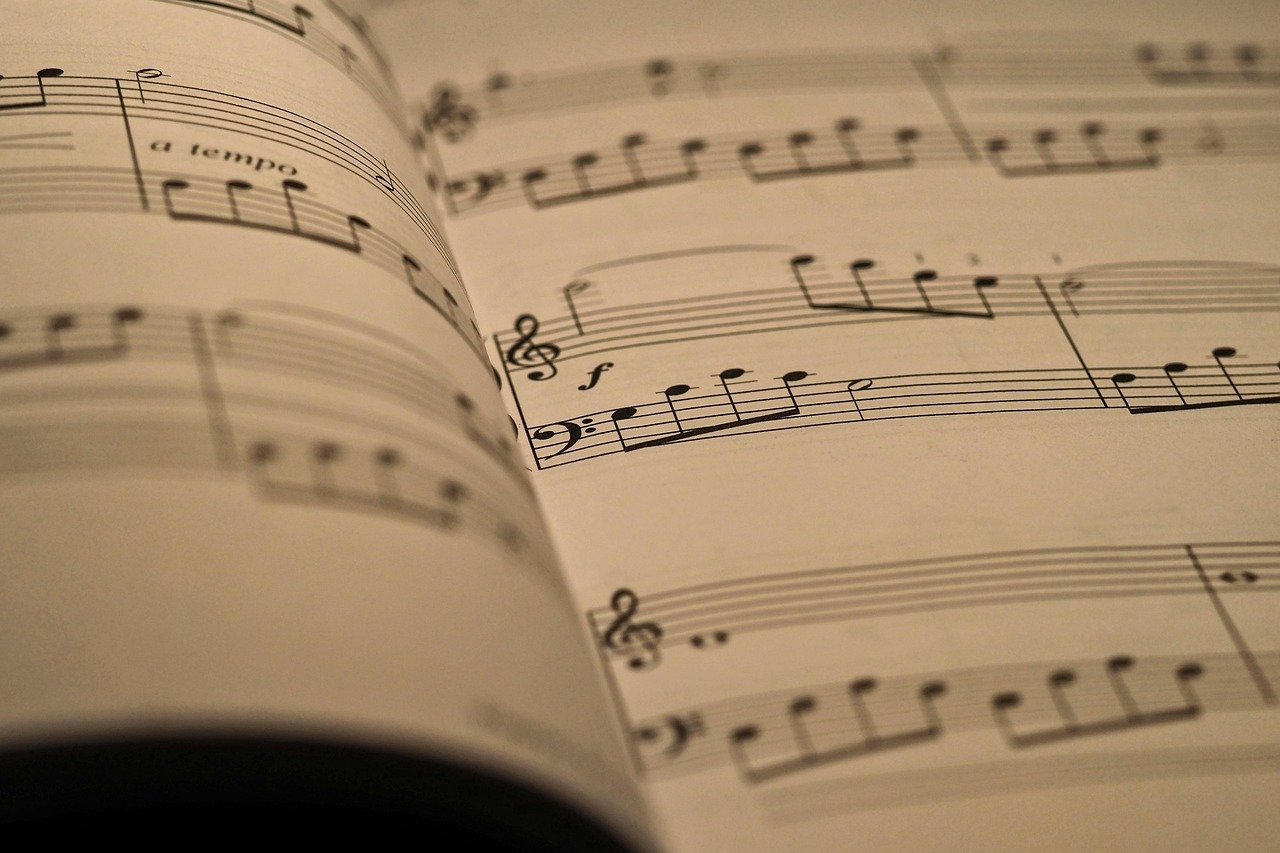
Songs with chords add a left-hand accompaniment under the melody. Yousician observes that easy piano songs sometimes have three-note chords for the left hand, so a chord in this setting means three keys pressed together. A lead sheet is the common way to read such songs: it shows the melody with chord symbols written above it.
The method for playing a song with chords is the same wherever the chords come from:
- Split the hands. Yousician advises practising each hand independently and then playing both hands together.
- Keep the melody simple. Pair a right-hand melody you already know with the left-hand chords, rather than learning both parts from scratch.
- Stay in a friendly key. A key of C and a moderate tempo apply here as much as with single-line songs.
This stage suits learners who have finished the fixed-position songs above. Readers curious about where the difficulty curve ends can look at the hardest piano piece for contrast. Before that, though, comes the practical matter of finding the music itself.
Finding free beginner sheet music
The most direct source of free scores is a public-domain library. The IMSLP Petrucci Music Library contains 72,348 works and 254,934 scores in the public domain, according to a Coastal Carolina University library guide. The same guide counts 7,610 composers and 227 performers in those holdings, so searching by composer or title is usually quicker than browsing.
The guide also points to older popular repertoire. The Library of Congress historic sheet music collection consists of approximately 9,000 items published from 1800 to 1922. The Lester S. Levy collection contains more than 29,000 pieces of popular American music from 1780 to 1960. University libraries can help as well, since the guide mentions a list of the piano scores available in the University Libraries.
These collections cover older material. A traditional tune such as Twinkle Twinkle Little Star is a natural thing to look for there, but each listing should be checked for its own status. Recent pop songs such as Midnight Train to Georgia and Californication are better sought as published arrangements, and any arrangement should be checked before copying or sharing it.
Frequently asked questions
| Question | Answer |
|---|---|
| Which song should a first-time player learn first? | Twinkle Twinkle Little Star, then Yankee Doodle once both hands feel steady. Both are listed among the easiest songs because they avoid sharps and flats. |
| Is it fine to play a melody with a single finger? | Yes, as a first step. When the tune is familiar, give each finger its own key so the hand learns the five-finger position. |
| Where can free beginner sheet music be found? | IMSLP and the Library of Congress historic sheet music collection are good starting points. University libraries may also list piano scores. |
| Do chord songs need both hands together straight away? | No. Learn the melody and the left-hand chords separately, then combine them. |