This Donner DEP-20 review finds a stand-mounted 88-key digital piano with weighted hammer-action keys, 128-note polyphony and 3 pedals, best suited to home beginners who want a furniture-style setup.
It sits in the entry tier of Donner’s DEP range. Readers still comparing categories can start with the best digital pianos overview, or work through a digital piano buying guide before settling on a model.
Donner DEP-20 specifications at a glance
| Attribute | Manufacturer-stated value | Planning use |
|---|---|---|
| Keyboard | 88 keys, stand-mounted version | Full range for standard beginner repertoire |
| Key action | Weighted hammer-action | Closer to an acoustic touch than unweighted keys |
| Polyphony | 128 notes | Headroom for pedalled, layered passages |
| Pedals | 3, with included furniture stand | Ready for sustain practice without extra purchases |
| Speakers | Dual 25W | Built-in sound for a room without headphones |
| Sounds and rhythms | 238 tones, 200 rhythms | Variety for exploring beyond piano tone |
| Size with stand | 132 × 28.4 × 76 cm | Measure the wall or alcove before ordering |
| Materials (with stand) | Wood and ABS plastic | Furniture-style cabinet rather than a bare keyboard |
These figures come from Donner’s own DEP-20 versus DEP-16 comparison and its DEP-20 product guide.
Key action and touch
Donner states that the DEP-20 uses a weighted hammer-action keyboard designed to deliver a balanced, traditional piano response. That is the single most important attribute for a learner, because key weight shapes finger strength and control from the first lesson. A weighted action is the right baseline for anyone planning to move to an acoustic piano later.
The practical reading is that the DEP-20 offers weight but not necessarily the graded feel of a higher model. Players who care about a heavier bass and lighter treble should try a graded-action instrument before committing, while a first-year student will find the DEP-20 keys perfectly adequate for learning.
The keyboard itself is a full-sized 88-key layout, so the DEP-20 covers the same note range as an acoustic piano. That matters more than any feature list for beginners who intend to play classical pieces or graded exam repertoire.
Sounds, polyphony and practice features
Donner lists 128-note polyphony for the DEP-20. Polyphony is the number of notes the instrument can sound at once, and sustained pedalling plus layered tones consume it quickly. At 128 notes, beginner and intermediate pieces will not run out of voices in ordinary playing.
The sound library runs to 238 tones and 200 rhythms, according to Donner. The piano tones will be used most, but the extra voices and accompaniment rhythms give younger learners something playful to explore between scales. Donner also says the instrument ships with 100 demo songs and is designed with beginners in mind.
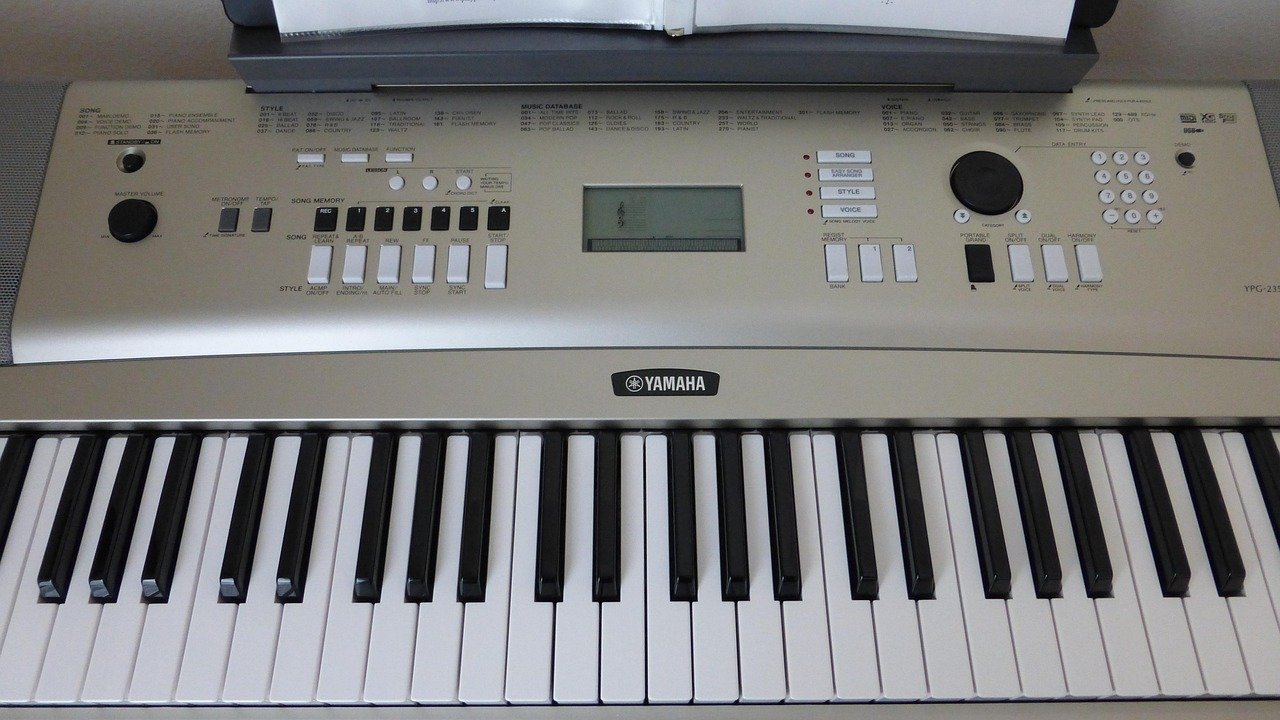
Donner’s comparison page lists recording, transpose and keyboard drum mode, plus MP3 playback and a backlit LCD display. Transpose helps when accompanying a singer, and recording lets a student hear back a practice take. The display is the main route into the settings, so the panel is worth a look in a listing photo before buying.
Dual 25W speakers are built in, which Donner contrasts with 20W total output on the DEP-16. For living-room practice that is a meaningful step up in built-in volume and clarity over the smaller model.
Stand, pedals, size and build
Donner states that the DEP-20 comes with its furniture stand and a 3-pedal setup. The stand-mounted version is described as suitable for home use, so the stand and pedals are already part of the instrument and do not need to be sourced separately.
With the stand attached, Donner gives the dimensions as 132 × 28.4 × 76 cm, and the materials as wood plus ABS plastic. The depth of 28.4 cm is shallow, which suits a narrow wall space, while the 132 cm width needs a clear stretch of floor. Check the listed weight on the retailer page before planning a move up stairs, since the figure is not part of the comparison data above.
That fits a household that wants an instrument it can reposition for cleaning or a change of room, though a stand-mounted piano is still a semi-fixed object rather than a gig keyboard.
The DEP-20 within Donner’s DEP range
Donner presents the DEP-20 as the stand-mounted 88-key version with 3 pedals, and the DEP-16 as the smaller-speaker alternative. Its published comparison is the clearest in-range benchmark: the DEP-20 has dual 25W speakers, while the DEP-16 has built-in speakers with 20W total output. A buyer choosing between those two should treat speaker output and the furniture-style stand as the deciding differences.
Those four attributes are the ones that separate beginner pianos in practice, and checking them side by side avoids relying on model numbers to imply a ranking.
Shoppers who would rather weigh a different brand can compare against the best yamaha digital piano picks, which show what a major-brand alternative offers at similar entry level.
Who the DEP-20 suits
- Home beginners: weighted keys, 88 notes, built-in demo songs and an included stand mean a student can start lessons without assembling a separate kit of accessories.
- Families sharing a room: the furniture stand and wood-and-plastic cabinet look more like a piece of furniture than a keyboard on a folding stand.
- Players planning to progress: the weighted action is a good start, but students heading toward advanced repertoire should compare against graded-action models.
- Gigging or travelling musicians: the stand-mounted format is aimed at home use, so a portable stage keyboard is the better fit.
As a verdict, the DEP-20 is a reasonable, well-equipped home starter piano whose strength is the package: key count, pedals, stand, speakers and learning features in one purchase. Its limits are the basic weighted action and the lack of a published graded feel.

Frequently asked questions
Does the Donner DEP-20 have Bluetooth or USB-MIDI?
A third-party comparison lists USB-MIDI as available for plug-and-play with PC and Mac, and lists Bluetooth as absent. Traditional MIDI ports are also listed as absent, so computer connection runs over USB.
Is a Donner digital piano good?
Quality varies by model, so judge each one on its own specifications. The DEP-20 combines 88 weighted keys, 128-note polyphony and an included stand with 3 pedals, which is a solid entry-level package for home practice.
Can the DEP-20 play MP3 files and record?
Donner lists recording, transpose, keyboard drum mode and MP3 playback among its functions, along with a backlit LCD display.